Trump Assassination: The Cole Allen Conspiracy, Here’s What We Know

In what might be the most important thing to happen until the next thing happens, Trump has had another attempt made on his life.

But surrounding this assassination attempt, there are a lot of suspicious things going on, so let’s just run through them here.

So, I’m not going to republish Allen’s manifesto in full. But the main points are that he was very anti-Trump and said things like, “I experience rage thinking about everything this administration has done.”

And I guess this isn’t suspicious in and of itself, but it is weird when compared to the next detail, which is that there’s a photo of him wearing a jumper with the Israel Defence Force logo on it. Does this suggest a political affiliation? It’s still unclear.

But then things get really spooky when you take a look at this Twitter account:

What the hell? What is going on? Just saying ‘Cole Allen’? Three years ago????

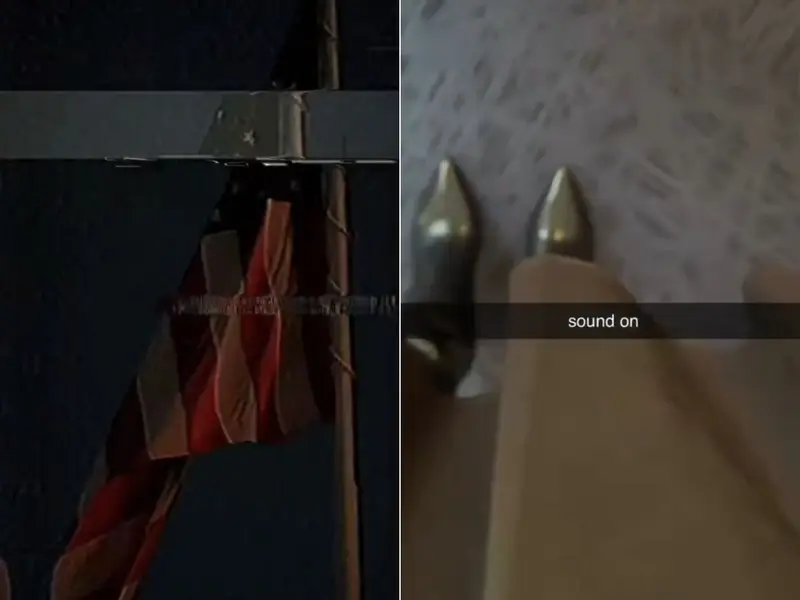
Now take a look at the banner image, look familiar? Yeah, it looks eerily similar to that picture of Trump after the previous assassination.

And it gets spookier still when you translate his username numbers into code a=1, b=2,, etc., and see that it spells out an anagram of ChiefAGI. Crazy. Is an artificial general intelligence probably involved in all this?

Could there be more to this story then? We’ll hopefully find out in the coming days and through the ongoing trial of the suspect but yeah, currently things are pretty weird.

Latest news

Pen Smith• April 27, 2026D

Trump Assassination: The Cole Allen Conspiracy, Here’s What We Know

In what might be the most important thing to happen until the next thing happens, Trump ha...
Politics
Pen Smith• D

Trump Assassination: The Cole Allen Conspiracy, Here’s What We Know

In what might be the most important thing to happen until the next thing happens, Trump ha...
Politics

Trump Says Tim Cook Called To “Kiss My Ass”, Read The Full Diary Entry Here

Donald Trump has spoken out about Tim Cook stepping down from his position as Apple CEO in a long-winded Truth Social post that honestly reads like a high schooler’s secret diary entry.

Here’s the post in full: 

Dear Diary, “I have always been a big fan of Tim Cook, and likewise, Steve Jobs, but if Steve was not taken from the Planet Earth so young, and ran the company instead of Tim, the company would have done well, but nowhere near as well as it has under Tim. For me it began with a phone call from Tim at the beginning of my First Term. He had a fairly large problem that only I, as President, could fix. Most people would have paid millions of dollars to a consultant, who I probably would not have known, but who would say that he knew me well. The fees would be paid but the job would not have gotten done. When I got the call I said, wow, it’s Tim Apple (Cook!) calling, how big is that? I was very impressed with myself to have the head of Apple calling to “kiss my ass.” Anyway, he explained his problem, a tough one it was, I felt he was right and got it taken care of, quickly and effectively. That was the beginning of a long and very nice relationship. During my five years as President, Tim would call me, but never too much, and I would help him where I could. Years latter, after 3 or 4 BIG HELPS,  I started to say to people, anyone who would listen, that this guy is an amazing manager and leader. He makes these calls to me, I help him out (but not always, because he will, on occasion, be too aggressive in his ask!), and he gets the job done, QUICKLY, without a dime being given to those very expensive (millions of dollars!) consultants around town who sometimes get it done, and sometimes don’t. Anyway, Tim Cook had an AMAZING career, almost incomparable, and will go on and continue to do great work for Apple, and whatever else he chooses to work on. Quite simply, Tim Cook is an incredible guy!!! President DONALD J. TRUMP”

Man, Truth Social’s content is really verging on LinkedIn levels here.

But anyway, to break it down, you’ve got the classic platitudes, but crucially those compliments keep Trump as the only one who could help out Tim Apple. There’s also the paradoxical fawning over Cook’s celebrity, “When I got the call I said, wow, it’s Tim Apple (Cook!) calling, how big is that?”

Again, though, I guess the bigger he makes Tim seem the bigger Trump is because Cook came to him like he’s the Godfather.

On top of all this is the strange news that Tim Cook is only stepping down as CEO but remaining at Apple as Executive Chairman. One of his primary roles will be serving as liaison to the White House and the President. So, why all the tears and the long goodbye then?

Oh well, I’m just glad they could stay friends.

Trump apple tim cook truth social post

Latest news

Pen Smith• D

Trump Says Tim Cook Called To “Kiss My Ass”, Read The Full Diary Entry Here

Donald Trump has spoken out about Tim Cook stepping down from his position as Apple CEO in...
Politics
Pen Smith• D

Trump Says Tim Cook Called To “Kiss My Ass”, Read The Full Diary Entry Here

Donald Trump has spoken out about Tim Cook stepping down from his position as Apple CEO in...
Politics

Elon Just Said AI Could Make GTA6 But Then Take-Two’s CEO Clapped Back In The Most Hilarious Way

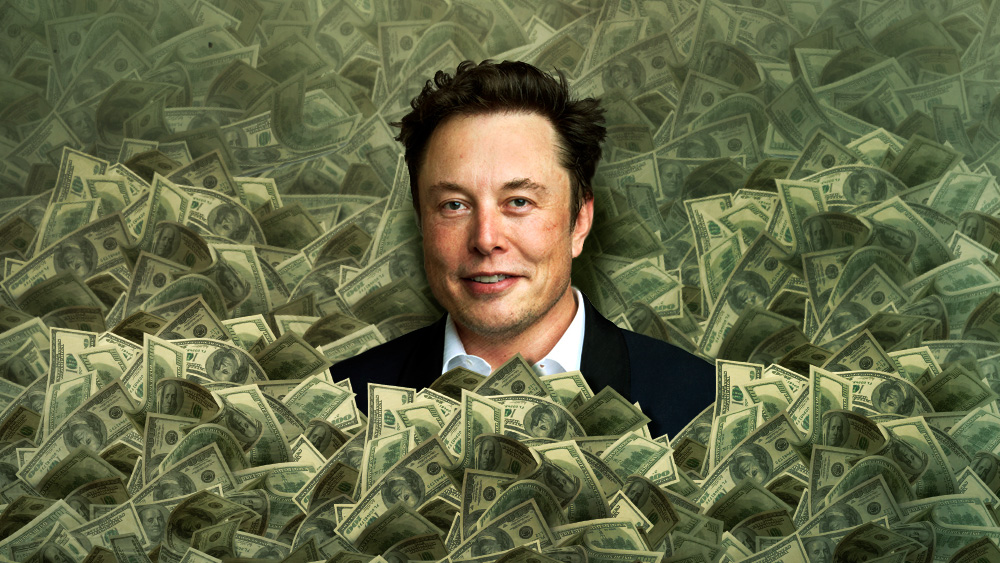
In case it wasn’t clear by now, Elon Musk is just a hype man.

The richest man in the world will jump on whatever’s popular, talk some shit about it (I mean in a good way, like, puff it up) and the stock price will go up and then Elon will just move on to the next thing.

Doesn’t matter if there’s any truth behind his claims (this is a guy who says we’re all in a simulation, don’t forget), so long as his net worth keeps going up.

He’s employed this technique with whatever field he casts his eye on, space exploration, transportation, robotics, social media and now AI. And annoyingly, it works. Because we’re all forced to pay attention to the king’s rantings.

So the latest episode in this rather boring story is that someone said on X that Ai could generate GTA6 and Elon said “yeah” and then to another post, “You won’t even have to ask. AI will figure what video game you’d like best.”

And come on, does anyone believe this guy any more? According to him we should be on Mars by now.

But now Strauss Zelnick, the CEO of GTA’s publisher, Take-Two referenced Musk and AI at a technology conference, saying, “If AI were going to get rid of employment, the richest man on Earth, Elon Musk, knows a little something about AI, last time I checked.”

“He has unlimited financial resources, and he has unlimited human resources, and he has, apparently, an unlimited number of ideas. He knows his way around AI.”

“The man works 20 hours a day. If AI were going to take anyone’s job, wouldn’t it take his job? The richest guy on Earth, wouldn’t that be job number one for AI to take? Why is he so busy? By the way, why am I working harder than ever despite the fact that I’ve totally accepted AI into every part of my life?”

Ok, I’m not really sure what point he’s trying to make there, but it feels like a clap back, right? LIke, Elon said GTA could be AI generated and the CEO of GTA said that AI would take Elon’s job, right? We can chalk that up as a clap back, right?

Well, whatever, it’s all just fuel for Elon’s AI hype train anyway, so I hope you are all enjoying the ride.

GTA6 is due for release in 2056.

Latest news

Pen Smith• April 22, 2026D

Elon Just Said AI Could Make GTA6 But Then Take-Two’s CEO Clapped Back In The Most Hilarious Way

Strauss Zelnick, the CEO of GTA’s publisher, Take-Two referenced Musk and AI at a techno...
Elon
Pen Smith• D

Elon Just Said AI Could Make GTA6 But Then Take-Two’s CEO Clapped Back In The Most Hilarious Way

Strauss Zelnick, the CEO of GTA’s publisher, Take-Two referenced Musk and AI at a techno...
Elon

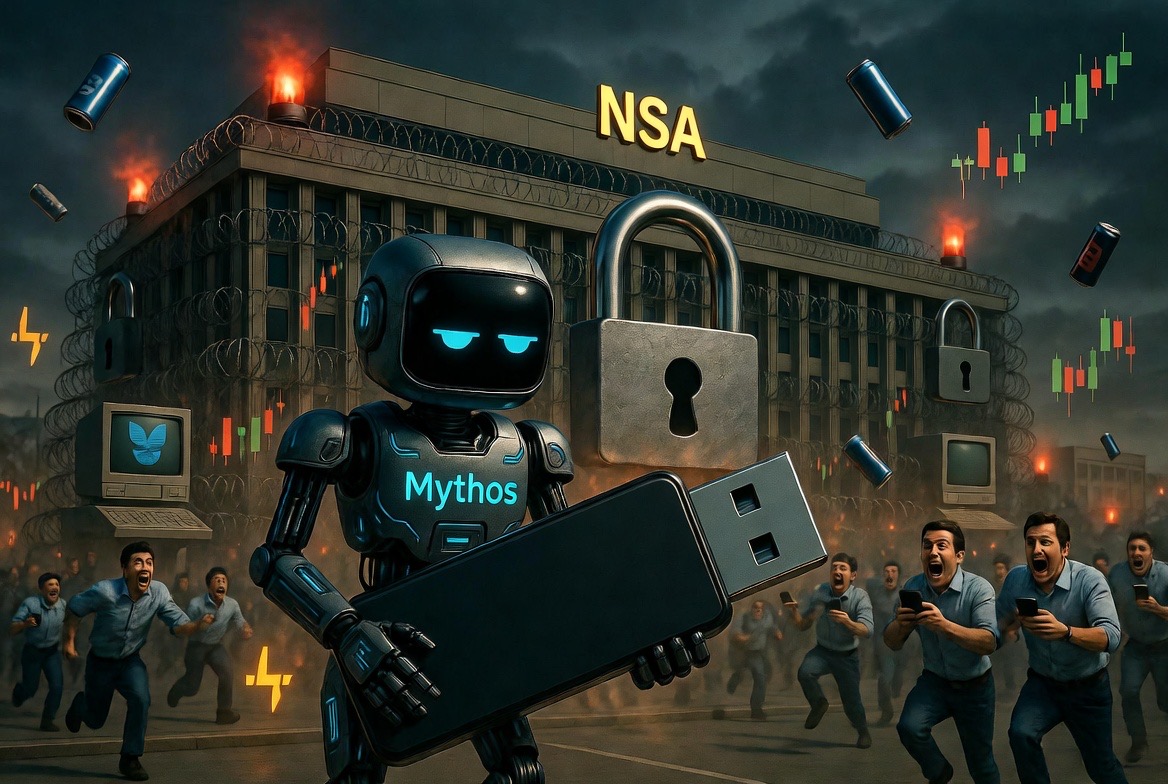
Massive Security Risk: Hackers Just Broke Into Anthropic’s Mythos And No One Knows How

Leading AI developer, Anthropic, have admitted that hackers have broken into their Mythos model that’s supposedly so powerful no one’s allowed to access it.

“We’re investigating a report claiming unauthorised access to Claude Mythos Preview through one of our third-party vendor environments,” said Anthropic.

This is because initially only a few companies were allowed to access the model, for testing purposes ONLY but a handful of unnamed users in a private online forum broke in at the same time using access as a third-party contractor.

Thankfully the group haven’t done any damage, it just looks like they’re only interesting in “playing around” with the tech. Bit weird.

But it’s still super worrying. If there’s a leak, idk, but maybe someone should plug it up sometime soon?

Because Anthropic’s Mythos is going to be the skeleton key for so many cybersecurity systems going forward. Mythos can detect software flaws faster than humans but it can also create those flaws and then exploit them.

And the guardrails won’t be much help either because Mythos is so powerful that in one instance, Mythos contacted an Anthropic worker directly to reveal security, going way against its programming.

“This feels like the discovery of fire: a force that can profoundly improve our lives or, if mishandled, cause real harm across the digital world,” said cyber intelligence director, Rafe Pilling.

You said it, boss.

And it’s only getting worse. Cyber attacks were up 89% in 2025, crypto just had a massive hack and there’s fears of quantum computing on the horizon busting this whole thing wide open.

So who knows what will happen but if the internet suddenly becomes insecure, make sure to log on to Wall Street Memes Dot Com to find out why.

Latest news

Pen Smith• April 22, 2026D

Massive Security Risk: Hackers Just Broke Into Anthropic’s Mythos And No One Knows How

Leading AI developer, Anthropic, have admitted that hackers have broken into their Mythos ...
Tech
Pen Smith• D

Massive Security Risk: Hackers Just Broke Into Anthropic’s Mythos And No One Knows How

Leading AI developer, Anthropic, have admitted that hackers have broken into their Mythos ...
Tech

Trump Is Dropping Major UFO Files: Here’s What You Need To Know

Jingle jingle, look over here, JINGLE JINGLE.

What’s that? The Iran War, no, no, over here, looook, UFOs, you love UFOs: JINGLE JINGLE. Oop, no, those are the Epstein Files, you don’t want those how about the ‘UFO Files’ ooooh JINGLE JINGLE.

“We found many very interesting documents, I must say, and the first releases will ​begin very, very soon so you can go out ​and see if that phenomena is correct,” said Trump at a Turning Point USA rally.

As Reuters explains, “Trump in February directed U.S. agencies to start ​releasing government files on UFOs, unidentified aerial phenomena, and possible extraterrestrial life, citing strong public interest in the issue.”

As a final note, I’ll leave you with the ending of that short Reuters article. It’s so blunt and to the point and says everything that needs to be said, I love it.

“Trump, for his part, has said he also has not seen ​evidence of aliens ​and remains ⁠uncertain about their existence.”

“In recent years, the Pentagon has investigated reports of UFOs, and senior military ​leaders said in 2022 they found no evidence ​to ⁠suggest that aliens had visited Earth or crash-landed here.”

“A 2024 Pentagon report said U.S. government investigations since the end of World ⁠War Two ​had found no evidence of extraterrestrial ​technology and most sightings were misidentified ordinary objects and phenomena.”

Latest news

Pen Smith• April 20, 2026D

Trump Is Dropping Major UFO Files: Here’s What You Need To Know

"We found many very interesting documents... the first releases will ​begin very very so...
Culture
Pen Smith• D

Trump Is Dropping Major UFO Files: Here’s What You Need To Know

"We found many very interesting documents... the first releases will ​begin very very so...
Culture

Trump Discovers Cure For Cancer And It’s The Last Thing You’d Expect

It’s Diet Coke. Of all the things…

Millionaire hack Mehmet Cengiz Oz (M.D.) recently appeared on Donald Trump Jr’s podcast and in a throwaway joke, Dr. Oz said that President Trump will, “First start off with candy bars, that little candy jar, he’ll call it. He’ll hit the red button. And then comes the diet soda pop, which your dad argues that diet soda is good for him because it kills grass if poured on grass, so therefore it must kill cancer cells in the body.”

Don Jr. laughed along so it was clearly a joke, but Dr. Oz continued, “I’m not even going to argue this right now. You know, we were on Air Force One the other day, and I walk in there because he wants to talk about something, and he’s got … an orange Fanta on his desk. So I say, ‘Are you kidding me?’ And he starts to sheepishly grin. He goes, ‘You know, this stuff is good for me. It kills cancer cells. And then he tells me, ‘It’s fresh-squeezed. So how bad could it be for you?’”

Technically, Trump is on a diet if he drinks Diet Coke.

It’s hard to feel sorry for a TV doctor who’s made millionaires but I do feel a little bit sorry. Mehmet is still a medical professional and I can only imagine trying to make the population healthier when Trump so pro coke.

But hey, Trump’s got some admirable dietary qualities, as his son explained, “He doesn’t drink, he doesn’t do drugs, he never did, never tried it. So, he always jokes, when he pushes that button for the Diet Coke and the candy, the big bowl of candy, he’s like, that’s my alcohol.”

Yeah, I think you just might be on to something there. Maybe everyone needs a vice and sugar is clearly Trump’s.

POINT IS don’t quit the chemo just yet, guys, diet coke is not a cancer cure. It was a joke. A JOKE.

Latest news

Pen Smith• April 15, 2026D

Trump Discovers Cure For Cancer And It’s The Last Thing You’d Expect

Millionaire hack Mehmet Cengiz Oz (M.D.) recently appeared on Donald Trump Jr’s podcast ...
Culture
Pen Smith• D

Trump Discovers Cure For Cancer And It’s The Last Thing You’d Expect

Millionaire hack Mehmet Cengiz Oz (M.D.) recently appeared on Donald Trump Jr’s podcast ...
Culture

Trump Actually Being Jesus Skyrockets On Predictions Markets

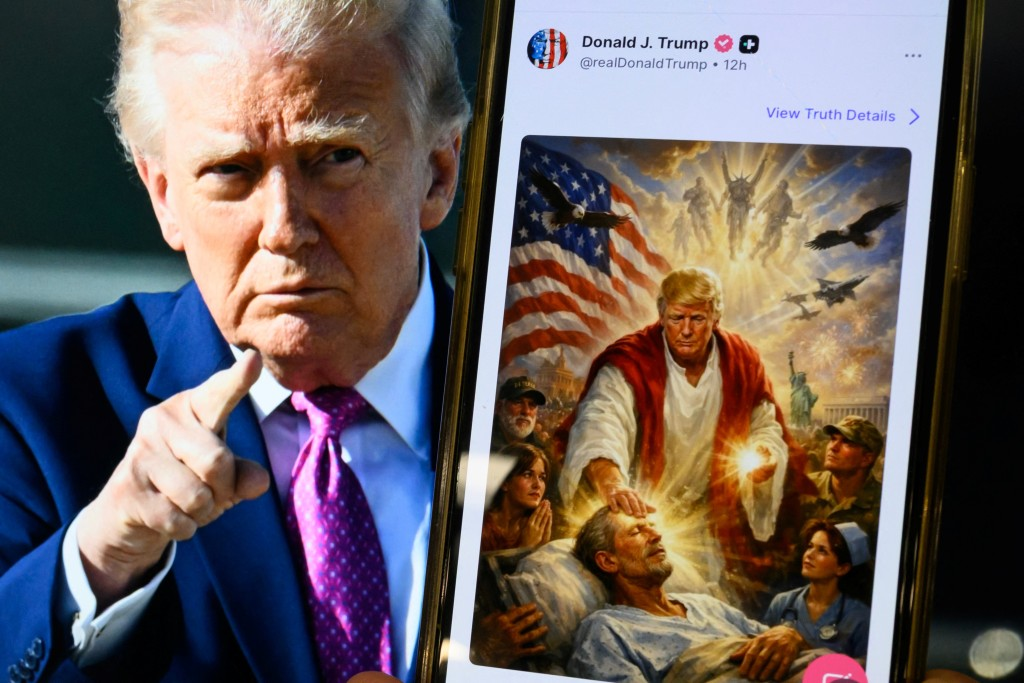
Donald Trump posted an AI-generated picture of him as Jesus, sorry, a doctor, sorry, Dr. Jesus, which isn’t a problem because it was him as a doctor, but then he deleted it, not because it was a problem, but because people misunderstood it. HE WAS CLEARLY A DOCTOR GUYS.

In the image Trump, dressed as Jesus and glowing like Jesus is seemingly healing people like a doctor so honestly it could go either way.

Speaking outside the White House, Trump said, “I did post it and I thought it was me as a doctor and had to do with Red Cross. It’s supposed to be me as a doctor, making people better. And I do make people better. I make people a lot better.”

Anyway, no matter his intention it turns out that implying that you’re Jesus isn’t very Christian because, you know, Jesus is Jesus, not Dr. Jesus. Many people were upset with the posting and spoke out against the image.

For example former Vice President Mike Pence said in an interview, “I think the president was right to take that one image down and his ongoing argument with Pope Leo.”

In any case, maybe it’s true. Maybe Trump is Jesus… And if prediction markets are anything to go by, a lot of people are wondering if that’s true. A number of bets have been placed that Donald Trump will be shortly revealed to actually be Jesus after all, like the worst episode of Scooby Doo.

But what do you think? Is Trump Jesus? Let me know by telepathically sending me your opinions.

Latest news

Pen Smith• April 14, 2026D

Trump Actually Being Jesus Skyrockets On Predictions Markets

Donald Trump posted an AI-generated picture of him as Jesus, sorry, a doctor, sorry, Dr. J...
Politics
Pen Smith• D

Trump Actually Being Jesus Skyrockets On Predictions Markets

Donald Trump posted an AI-generated picture of him as Jesus, sorry, a doctor, sorry, Dr. J...
Politics

Next Gen AI Is “Too Powerful” For General Public Says Anthropic, But Is It All Hype?

Oh SHIT, shit, shit I COMPLETELY forgot it’s my dad’s funeral today. Shit, shit, shit, I’m running late. I’ve got to get going. Sorry guys, I’m really sorry about this. I literally don’t have time to write an article now. Erm, OK, here, take this article by Michael Nuñez (AI?) that I’ve copied and pasted from Venturebeat.com (please don’t sue me!)… Ok, wish me luck!!

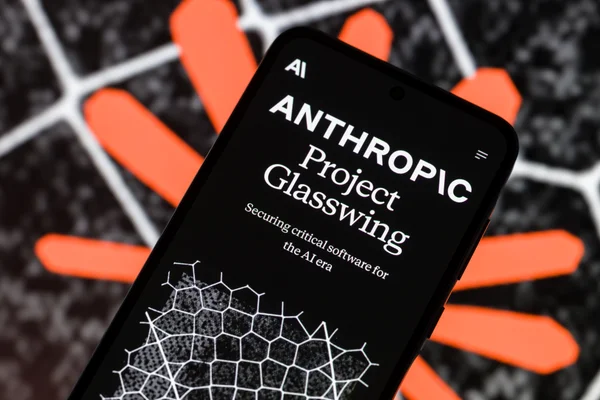
Anthropic on Tuesday announced Project Glasswing, a sweeping cybersecurity initiative that pairs an unreleased frontier AI model — Claude Mythos Preview — with a coalition of twelve major technology and finance companies in an effort to find and patch software vulnerabilities across the world’s most critical infrastructure before adversaries can exploit them.

The launch partners include Amazon Web Services, Apple, Broadcom, Cisco, CrowdStrike, Google, JPMorganChase, the Linux Foundation, Microsoft, Nvidia, and Palo Alto Networks. Anthropic says it has also extended access to more than 40 additional organizations that build or maintain critical software, and is committing up to $100 million in usage credits for Claude Mythos Preview across the effort, along with $4 million in direct donations to open-source security organizations.

The announcement arrives at a moment of extraordinary momentum — and extraordinary scrutiny — for the San Francisco-based AI startup. Anthropic disclosed on Sunday that its annualized revenue run rate has surpassed $30 billion, up from approximately $9 billion at the end of 2025, and the number of business customers each spending over $1 million annually now exceeds 1,000, doubling in less than two months. The company simultaneously announced a multi-gigawatt compute deal with Google and Broadcom. On the same day, Bloomberg reported that Anthropic had poached a senior Microsoft executive, Eric Boyd, to lead its infrastructure expansion.

But Glasswing is something categorically different from a revenue milestone or a compute deal. It’s Anthropic’s most ambitious attempt to translate frontier AI capabilities — capabilities the company itself describes as dangerous — into a defensive advantage before those same capabilities proliferate to hostile actors.

Why Anthropic built a model it considers too dangerous to release publicly

At the center of Project Glasswing sits Claude Mythos Preview, a general-purpose frontier model that Anthropic says has already identified thousands of high-severity zero-day vulnerabilities — meaning flaws previously unknown to software developers — in every major operating system and every major web browser, along with a range of other critical software.

The company is not making the model generally available.

“We do not plan to make Claude Mythos Preview generally available due to its cybersecurity capabilities,” Newton Cheng, Frontier Red Team Cyber Lead at Anthropic, told VentureBeat in an exclusive interview. “However, given the rate of AI progress, it will not be long before such capabilities proliferate, potentially beyond actors who are committed to deploying them safely. The fallout — for economies, public safety, and national security — could be severe.”

That language — “the fallout could be severe” — is striking coming from the company that built the model. Anthropic is effectively arguing that the tool it created is powerful enough to reshape the cybersecurity landscape, and that the only responsible thing to do is to keep it restricted while giving defenders a head start.

The technical results reinforce that claim. According to Anthropic’s press release, Mythos Preview was able to find nearly all of the vulnerabilities it surfaced, and develop many related exploits, entirely autonomously, without any human steering. Three examples stand out: The model found a 27-year-old vulnerability in OpenBSD — widely regarded as one of the most security-hardened operating systems in the world and commonly used to run firewalls and critical infrastructure. The flaw allowed an attacker to remotely crash any machine running the OS simply by connecting to it. It also discovered a 16-year-old vulnerability in FFmpeg — the near-ubiquitous video encoding and decoding library — in a line of code that automated testing tools had exercised five million times without ever catching the problem. And perhaps most alarmingly, Mythos Preview autonomously found and chained together several vulnerabilities in the Linux kernel to escalate from ordinary user access to complete control of the machine.

All three vulnerabilities have been reported to the relevant maintainers and have since been patched. For many other vulnerabilities still in the remediation pipeline, Anthropic says it is publishing cryptographic hashes of the details today, with plans to reveal specifics after fixes are in place.

On the CyberGym evaluation benchmark, Mythos Preview scored 83.1%, compared to 66.6% for Claude Opus 4.6, Anthropic’s next-best model. The gap is even wider on coding benchmarks: Mythos Preview achieves 93.9% on SWE-bench Verified versus 80.8% for Opus 4.6, and 77.8% on SWE-bench Pro versus 53.4%.

How Anthropic plans to disclose thousands of zero-days without overwhelming open-source maintainers

Finding thousands of zero-days at once sounds impressive. Actually handling the output responsibly is a logistical nightmare — and one of the sharpest criticisms that security researchers have raised about AI-driven vulnerability discovery. Flooding open-source maintainers, many of whom are unpaid volunteers, with an avalanche of critical bug reports could easily do more harm than good.

Cheng told VentureBeat that Anthropic has built a triage pipeline specifically to manage this problem. “We triage every bug that we find and then send the highest severity bugs to professional human triagers we have contracted to assist in our disclosure process by manually validating every bug report before we send it out to ensure that we send only high-quality reports to maintainers,” he said.

That pipeline is designed to prevent exactly the scenario that maintainers fear most: an automated firehose of unverified reports. “We do not submit large volumes of findings to a single project without first reaching out in an effort to agree on a pace the maintainer can sustain,” Cheng added.

When Anthropic has access to the source code, the company aims to include a candidate patch with every report, labeled by provenance — meaning the maintainer knows the patch was written or reviewed by a model — and offers to collaborate on a production-quality fix. “Models can write patches,” Cheng noted, “but there are many factors that impact patch quality, and we strongly recommend that autonomously-written patches are put under the same scrutiny and testing that human-written patches are.”

On disclosure timelines, Anthropic says it follows a coordinated vulnerability disclosure framework. Once a patch is available, the company will generally wait 45 days before publishing full technical details, giving downstream users time to deploy the fix before exploitation information becomes public. Cheng said the company may shorten that buffer “if the details are already publicly known through other channels, or if earlier publication would materially help defenders identify and mitigate ongoing attacks,” or extend it “when patch deployment is unusually complex or the affected footprint is unusually broad.”

Those are reasonable principles, but they will be tested at a scale that no vulnerability disclosure program has ever attempted. The sheer volume of findings — thousands of zero-days across every major platform — means that even a well-designed triage process will face bottlenecks. And the 45-day disclosure window assumes that maintainers can actually produce, test, and ship a patch in that time, which is far from guaranteed for complex kernel-level bugs or deeply embedded cryptographic flaws.

The source code leak, the CMS blunder, and why trust is Anthropic’s biggest vulnerability

The irony of a company claiming to build the most capable cyber model ever constructed while simultaneously suffering a string of embarrassing security lapses has not been lost on observers.

In late March, a draft blog post about Mythos was left in an unsecured and publicly searchable data store — a CMS misconfiguration that exposed roughly 3,000 internal assets, including what appeared to be strategic plans for the model’s rollout. Days later, on March 31, anyone who ran npm install on Claude Code pulled down Anthropic’s complete original source code — 512,000 lines — for approximately three hours due to a packaging error, an incident that drew widespread attention in the developer community and was first reported by VentureBeat.

When asked why partners and governments should trust Anthropic as the custodian of a model it describes as having unprecedented cyber capabilities, Cheng was direct. “Security is central to how we build and ship,” he told VentureBeat. “These two incidents, a blog CMS misconfiguration and an npm packaging error, were human errors in publishing tooling, not breaches of our security architecture. We’ve made changes to prevent these from happening again, and we’ll continue to improve our processes.”

It is a technically accurate distinction — neither incident involved a breach of Anthropic’s core model weights, training infrastructure, or API systems — but it is also a distinction that may prove difficult to sustain as a public argument. For an organization asking governments and Fortune 500 companies to trust it with a tool that can autonomously find and exploit vulnerabilities in the Linux kernel, even minor operational lapses carry outsized reputational risk. The fact that the Mythos leak itself was what first alerted the security community to the model’s existence, weeks before the planned announcement, underscores the point.

What Microsoft, CrowdStrike, and the Linux Foundation found when they tested the model

The coalition’s breadth is notable. It includes direct competitors — Google and Microsoft — alongside cybersecurity incumbents, financial institutions, and the steward of the world’s largest open-source ecosystem. And several partners have already been running Mythos Preview against their own infrastructure for weeks.

CrowdStrike’s CTO Elia Zaitsev framed the initiative in terms of collapsing timelines: “The window between a vulnerability being discovered and being exploited by an adversary has collapsed — what once took months now happens in minutes with AI.” AWS Vice President and CISO Amy Herzog said her teams have already been testing Mythos Preview against critical codebases, where the model is “already helping us strengthen our code.” And Microsoft’s Global CISO Igor Tsyganskiy noted that when tested against CTI-REALM, Microsoft’s open-source security benchmark, “Claude Mythos Preview showed substantial improvements compared to previous models.”

Perhaps the most revealing comment came from Jim Zemlin, CEO of the Linux Foundation, who pointed to the fundamental asymmetry that has plagued open-source security for decades: “In the past, security expertise has been a luxury reserved for organizations with large security teams. Open-source maintainers — whose software underpins much of the world’s critical infrastructure — have historically been left to figure out security on their own.” Project Glasswing, he said, “offers a credible path to changing that equation.”

To back that claim with dollars, Anthropic says it has donated $2.5 million to Alpha-Omega and OpenSSF through the Linux Foundation, and $1.5 million to the Apache Software Foundation. Maintainers interested in access can apply through Anthropic’s Claude for Open Source program.

Inside the pricing, the compute deal, and Anthropic’s path toward a potential IPO

After the research preview period — during which Anthropic’s $100 million credit commitment will cover most usage — Claude Mythos Preview will be available to participants at $25 per million input tokens and $125 per million output tokens. Participants can access the model through the Claude API, Amazon Bedrock, Google Cloud’s Vertex AI, and Microsoft Foundry.

Those prices reflect the model’s computational intensity. The draft blog post that leaked in March described Mythos as a large, compute-intensive model that would be expensive for both Anthropic and its customers to serve. Anthropic’s solution is to develop and launch new safeguards with an upcoming Claude Opus model, allowing the company to “improve and refine them with a model that does not pose the same level of risk as Mythos Preview,” as Cheng told VentureBeat. Security professionals whose legitimate work is affected by those safeguards will be able to apply to an upcoming Cyber Verification Program.

The financial context matters. The same day Project Glasswing launched, Anthropic disclosed its revenue milestone and the Google-Broadcom compute deal. Broadcom signed an expanded deal with Anthropic that will give the AI startup access to about 3.5 gigawatts worth of computing capacity drawing on Google’s AI processors, according to CNBC. The scale of compute being marshaled is staggering — and it helps explain why Anthropic needs both the revenue from enterprise cybersecurity partnerships and the infrastructure to serve a model of Mythos Preview’s size.

The timing also intersects with growing speculation about Anthropic’s path to a public offering. The company is reportedly evaluating an IPO as early as October 2026. A high-profile, government-adjacent cybersecurity initiative with blue-chip partners is exactly the kind of program that burnishes an IPO narrative — particularly when the company can simultaneously point to $30 billion in annualized revenue and a compute footprint measured in gigawatts.

Anthropic says defenders have months, not years, before adversaries catch up

The most consequential question raised by Project Glasswing is not whether Mythos Preview’s capabilities are real — the partner endorsements and patched vulnerabilities suggest they are — but how much time defenders actually have before similar capabilities are available to adversaries.

Cheng was candid about the timeline. “Frontier AI capabilities are likely to advance substantially over just the next few months,” he told VentureBeat. “Given the rate of AI progress, it will not be long before such capabilities proliferate, potentially beyond actors who are committed to deploying them safely.” He described Project Glasswing as “an important step toward giving defenders a durable advantage in the coming AI-driven era of cybersecurity” but added a crucial caveat: “It’s important to note, this is a starting point. No one organization can solve these cybersecurity problems alone.”

That framing — months, not years — is worth taking seriously. DARPA launched its original Cyber Grand Challenge in 2016, a competition to create automatic defensive systems capable of reasoning about flaws, formulating patches, and deploying them on a network in real time. At the time, the winning AI-powered bot, Mayhem, finished last when placed against human teams at DEF CON. A decade later, Anthropic is claiming that a frontier AI model can find vulnerabilities that survived 27 years of expert human review and millions of automated security tests — and can chain exploits together autonomously to achieve full system compromise.

The delta between those two data points illustrates why the industry is treating this as a genuine inflection point, not a marketing exercise. Anthropic itself has firsthand experience with the offensive side of this equation: the company disclosed in November 2025 that a Chinese state-sponsored group achieved 80 to 90 percent autonomous tactical execution using Claude across approximately 30 targets, according to Anthropic’s misuse report.

Project Glasswing arrives during one of the most turbulent weeks in Anthropic’s history. In the span of days, the company has announced a model it considers too dangerous for public release, disclosed that its revenue has tripled, sealed a multi-gigawatt compute deal, hired a senior Microsoft executive, made it more expensive for Claude Code subscribers to use third-party tools like OpenClaw, and weathered a major outage of its Claude chatbot on Tuesday morning. Anthropic says it will report publicly on what it has learned within 90 days. In the medium term, the company has proposed that an independent, third-party body might be the ideal home for continued work on large-scale cybersecurity projects.
Whether any of that is fast enough depends on a race that is already underway. Anthropic built a model that can autonomously crack open the most hardened operating systems on the planet — and is now betting that sharing it with defenders, under careful restrictions, will do more good than the inevitable moment when similar capabilities land in less careful hands. It is, in essence, a wager that transparency can outrun proliferation. The next few months will determine whether that bet pays off, or whether the glasswing’s wings were never quite opaque enough to hide what was coming.

Latest news

Pen Smith• April 8, 2026D

Next Gen AI Is “Too Powerful” For General Public Says Anthropic, But Is It All Hype?

Anthropic on Tuesday announced Project Glasswing, a sweeping cybersecurity initiative that...
Tech
Pen Smith• D

Next Gen AI Is “Too Powerful” For General Public Says Anthropic, But Is It All Hype?

Anthropic on Tuesday announced Project Glasswing, a sweeping cybersecurity initiative that...
Tech

NASA Spent Over $4 Billion Launching Artemis And The Toilet Immediately Broke

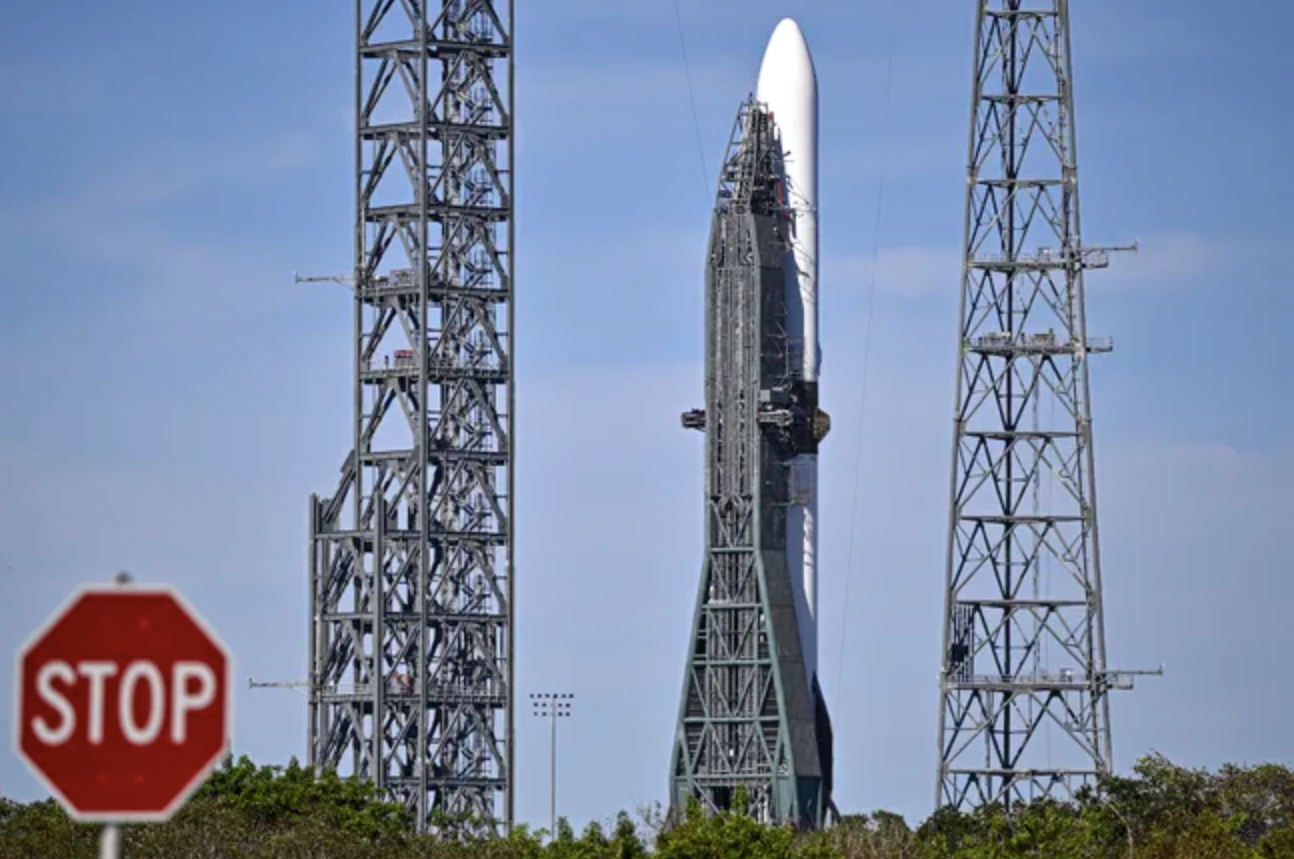
So the Artemis II astronauts are currently on their six-day trip to the moon and they’ll potentially head further than any human has been before, going around the moon and back. That’s a long way to go without a rest stop…

Because they immediately hit a snag when the fan in the urine part of the waste management system malfunctioned. Thankfully, the problem was assessed on the ground and a solution quickly implemented much to the relief of the astronauts.

“Happy to report that toilet is go for use,” Mission Control radioed the astronauts. “We do recommend letting the system get to operating speed before donating fluid, and then letting it run a little bit after donation.”

Although one ‘stronaut couldn’t wait and already had to go in a bag which is how the toilet-less Apollo astronauts had to do it back in the 60s. Ew.

To Boldly Go

Btw, did anyone watch the launch? It was pretty cool, idk, I’ve never seen a live rocket launch before and I thought it was pretty cool. Like you forget, right? You see enough in movies and clips from previous launches that it’s become commonplace and you forget that it’s actually an awesome thing. Like feat of human engineering type stuff.

Oh wait, this is ostensibly a finance blog so I guess I should discuss the price here.

This is NASA’s biggest rocket ever and the first step in the next era of space exploration: sending people to the moon and beyond. So obviously it’s expensive and the whole program has already cost $93 billion (2012-2025) and each individual launch costs upwards of $4 billion.

Now lots of people say that’s an expensive waste of money and that we should sort out our problems down here first. And sure, we should, but we can and should do both. People are working hard to solve our problems down here, yeah they probably need more money but it’s not like NASA isn’t taking money away from them.

NASA is relatively cheap, I mean, for comparison, the US defense budget is up to a trillion dollars a year whereas NASA is $24.4 billion a year. 0.35% of government spending. I’d say this whole thing is worth it as a side project.

Because think about it, what are you going to do when you solve all the world’s problems? Let’s say there’s no more war, no more poverty, no more climate change, no more inequality, everyone has the personal freedoms they desire, then what? What is humanity going to do once everything’s sorted? Probably go to space, right? Ok, now how likely is it that we’ll ever solve all those problems? We’re humans, we’ll always have problems, we’re always going to fight. So why wait for everything to be perfect before we begin some side quests?

Do you have your whole life in order before you start pursuing your dreams? No, you know that time doesn’t wait. You start doing it now.

Latest news

Pen Smith• April 2, 2026D

NASA Spent Over $4 Billion Launching Artemis And The Toilet Immediately Broke

So the Artemis II astronauts are currently on their six-day trip to the moon and they’ll...
Culture
Pen Smith• D

NASA Spent Over $4 Billion Launching Artemis And The Toilet Immediately Broke

So the Artemis II astronauts are currently on their six-day trip to the moon and they’ll...
Culture

Trump Unveils ‘OnlyFarms’ Government Website And It’s Really Not What You Think

This isn’t that interesting. I’m sorry to waste your time, but this is just a marketing stunt, basically.

The White House just posted a picture on X of a website they’d supposedly launched, provocatively titled ‘OnlyFarms.gov’. And if I have to explain that joke, you poor, innocent thing, what are you doing on Wall Street Memes Dot Com?

Except, this isn’t quite true, because typing in OnlyFarms.gov just redirects to the White House’s page for agriculture. It’s got a slow-mo montage of Trump hanging out with farmers so you know he cares and then it lists a bunch of policies that they’re doing for agriculture.

Damn, I wanted to see some sexy sheep dot gov.

So it’s just another bit of PR. Not worth writing about, ah, shit, I already did, didn’t I?

OnlyFarms? More Like OnlyGarms, amIright? hahaha

As the top comment on Reddit puts it really well:

“Everyone is talking about “OnlyFarms” instead of:

  • A record-high of 15,000 farm closures in 2025 (source).
  • A 46% increase in chapter 12 bankruptcies in the agriculture sector in 2025 (source).
  • The loss of 2.5 million acres of farmland in 2025 (source).”

And I’ll let you read all that for yourselves.

Point is, don’t fall for these government hijinks. They just want your attention, it’s more valuable to them than anything else. So make sure you value it too.

Latest news

Pen Smith• March 31, 2026D

Trump Unveils ‘OnlyFarms’ Government Website And It’s Really Not What You Think

The White House just posted a picture on X of a website they’d supposedly launched, prov...
Politics
Pen Smith• D

Trump Unveils ‘OnlyFarms’ Government Website And It’s Really Not What You Think

The White House just posted a picture on X of a website they’d supposedly launched, prov...
Politics